Description
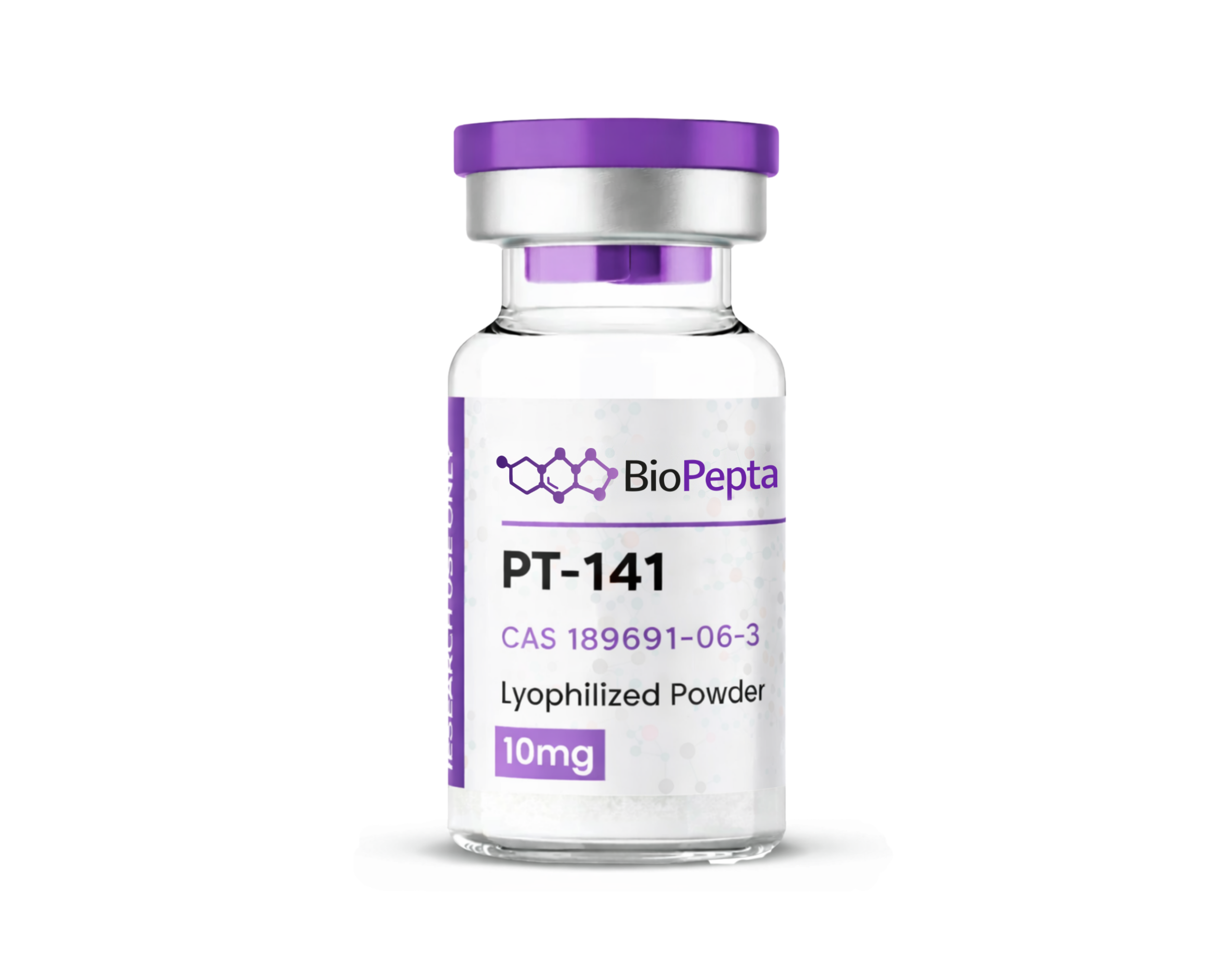
PT-141 (Bremelanotide) – Characteristics, Structure, and Application in Laboratory Research
What is PT-141?
PT-141, also known as Bremelanotide, is a synthetic peptide belonging to the group of α-MSH (alpha-melanocyte-stimulating hormone) analogs. The compound was developed during research on the melanocortin system and initially functioned under the laboratory designation PT-141, which is still commonly used in scientific literature today.
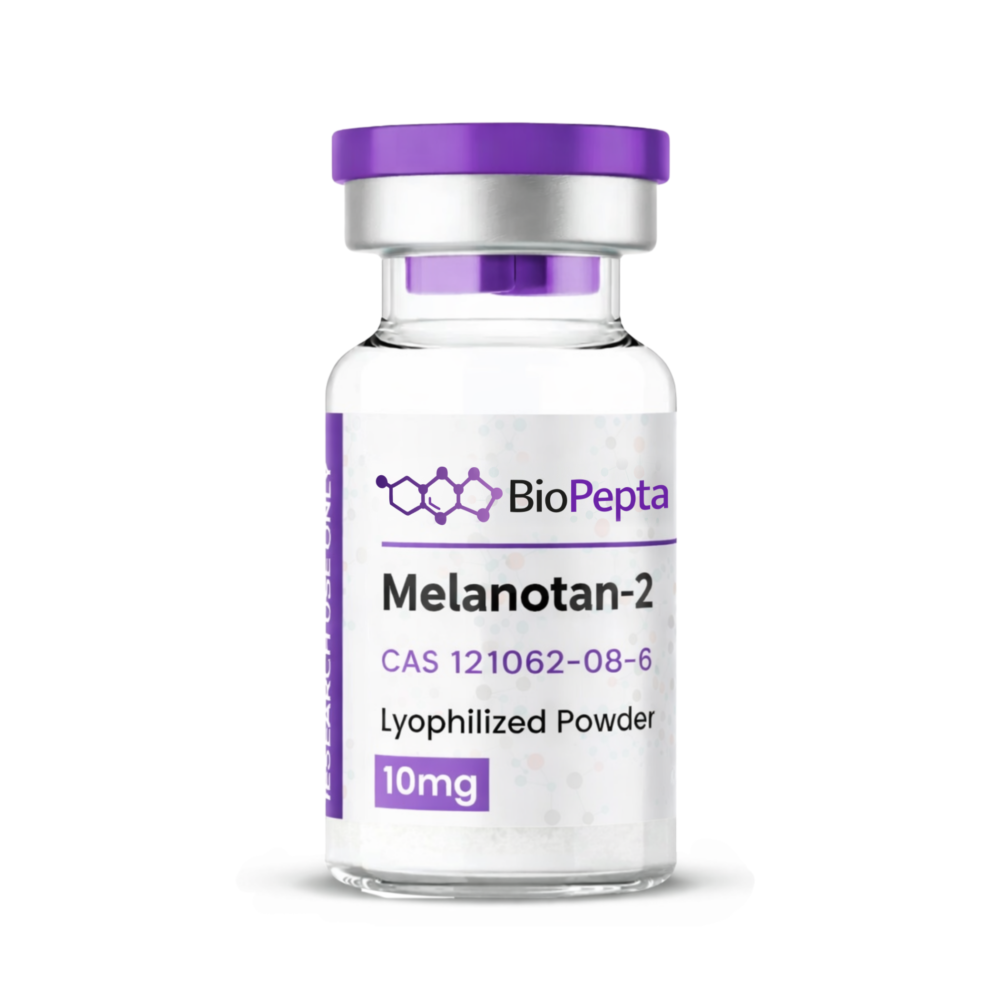
Structurally, PT-141 is closely related to Melanotan II. Both molecules originate from research on α-MSH analogs, yet they differ in chemical structure and their interaction profile with melanocortin receptors. For this reason, PT-141 has become a distinct subject of research in molecular biology, peptide chemistry, and experimental pharmacology.
Chemical Structure
PT-141 is a synthetic cyclic heptapeptide whose structure was designed to increase stability compared to natural peptides of the melanocortin family.
One of the most characteristic features of this molecule is the presence of a lactam ring, which influences the spatial conformation of the peptide. Consequently, PT-141 is often used as a research model during analyses of the relationship between a peptide’s spatial structure and its interaction with membrane receptors.
PT-141 as a Subject of Scientific Research
PT-141 is among the best-understood synthetic melanocortin receptor agonists. In scientific publications, it is primarily analyzed as a tool for studying the functioning of the melanocortin system and receptor signaling mechanisms.
The most frequently described research directions include:
- melanocortin receptors,
- MC3R and MC4R receptors,
- α-MSH analogs,
- the melanocortin system,
- cellular signaling,
- the relationship between peptide structure and function,
- molecular modeling,
- peptide chemistry,
- receptor ligand design.
A significant portion of scientific literature is also dedicated to comparing PT-141 with other melanocortin analogs, particularly Melanotan II, to analyze differences resulting from structural modifications.
Application in Laboratory Research
PT-141 is used in basic and experimental research regarding receptor and peptide biology.
It is most commonly applied in work within the fields of:
- molecular biology,
- biochemistry,
- peptide chemistry,
- structural biology,
- experimental pharmacology,
- melanocortin receptor research,
- ligand–receptor interaction modeling,
- liquid chromatography (HPLC),
- mass spectrometry (LC-MS),
- peptide identification and characterization methods.
Due to its well-understood chemical structure, PT-141 is often used as a reference compound during research on new peptide analogs interacting with melanocortin receptors.
Significance in Peptide Research
PT-141 holds an important place in research on the melanocortin peptide family. Researchers’ particular interest stems from its cyclic structure and affinity for melanocortin receptors, making it a frequent model for analyzing ligand–receptor interactions.
Scientific publications dedicated to this substance cover topics related to the design of synthetic α-MSH analogs, melanocortin receptor analysis, and the study of the relationship between a peptide’s spatial structure and its molecular properties.

 Free shipping on orders over 500 PLN
 Order by 3 PM for same-day shipping


Michał K. (verified owner) –