Description
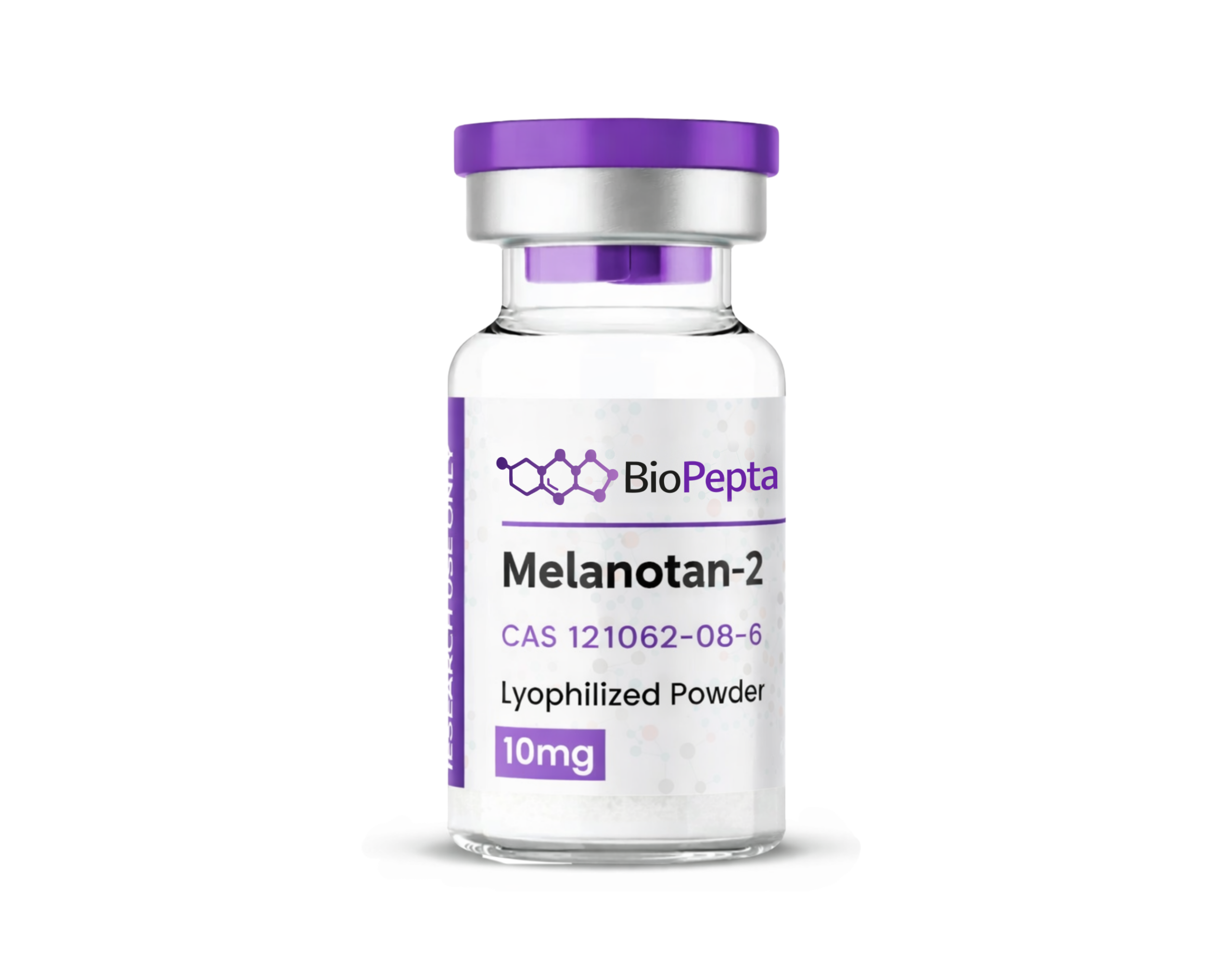
Melanotan II – Characteristics, Structure, and Application in Laboratory Research
What is Melanotan II?
Melanotan II (MT-2) is a synthetic peptide developed as an analog of α-MSH (alpha-melanotropin, alpha-melanocyte-stimulating hormone) – a natural peptide hormone belonging to the melanocortin group. The compound was designed for greater stability than the natural hormone, making it a subject of research in molecular biology, biochemistry, experimental endocrinology, and peptide chemistry for many years.
Since its development, Melanotan II has attracted the interest of the scientific community involved in the melanocortin system. In scientific literature, it is primarily described as a research tool used to analyze melanocortin receptors and cellular signaling mechanisms.
Chemical Structure
Melanotan II is a synthetic peptide based on the α-MSH structure. Amino acid modifications have been introduced into its sequence to increase the molecule’s stability and resistance to enzymatic degradation compared to the natural hormone.
A characteristic feature of Melanotan II is its cyclic structure. Unlike linear peptides, the cyclic structure affects the spatial conformation of the molecule, which is why this compound is often used in studies on designing stable peptide analogs.
Melanotan II as a Subject of Scientific Research
Melanotan II is one of the best-understood synthetic α-MSH analogs. In scientific publications, it is primarily analyzed in the context of melanocortin receptor biology and the relationship between peptide structure and its interaction with receptors.
The most common research directions include:
- melanocortin receptors (MC1R–MC5R),
- α-MSH analogs,
- the melanocortin system,
- receptor signaling,
- peptide chemistry,
- molecular modeling,
- structural biology,
- peptide analog design,
- peptide structure-function relationship.
Due to its well-described structure, Melanotan II is often used as a reference compound in studies on melanocortin receptor ligands.
Application in Laboratory Research
Melanotan II is used in basic and experimental research concerning peptides and membrane receptors.
It is most commonly applied in studies within the fields of:
- molecular biology,
- biochemistry,
- peptide chemistry,
- structural biology,
- experimental endocrinology,
- melanocortin receptor research,
- ligand-receptor interaction modeling,
- liquid chromatography (HPLC),
- mass spectrometry (LC-MS),
- peptide identification and characterization methods.
In scientific literature, it is also used in research on designing new peptide analogs and analyzing the properties of melanocortin receptor ligands.
Significance in Peptide Research
Melanotan II is one of the most recognized synthetic α-MSH analogs used in scientific research. Thanks to its cyclic structure and high affinity for melanocortin receptors, it serves as an important research model in analyzing the relationship between peptide structure and the mechanism of receptor binding.
Scientific publications concerning Melanotan II cover topics related to peptide chemistry, receptor biology, ligand design, and the structural properties of synthetic peptide hormone analogs.


 Free shipping on orders over 500 PLN
 Order by 3 PM for same-day shipping



Grzegorz Nowak (verified owner) –
Michał K. (verified owner) –