Description
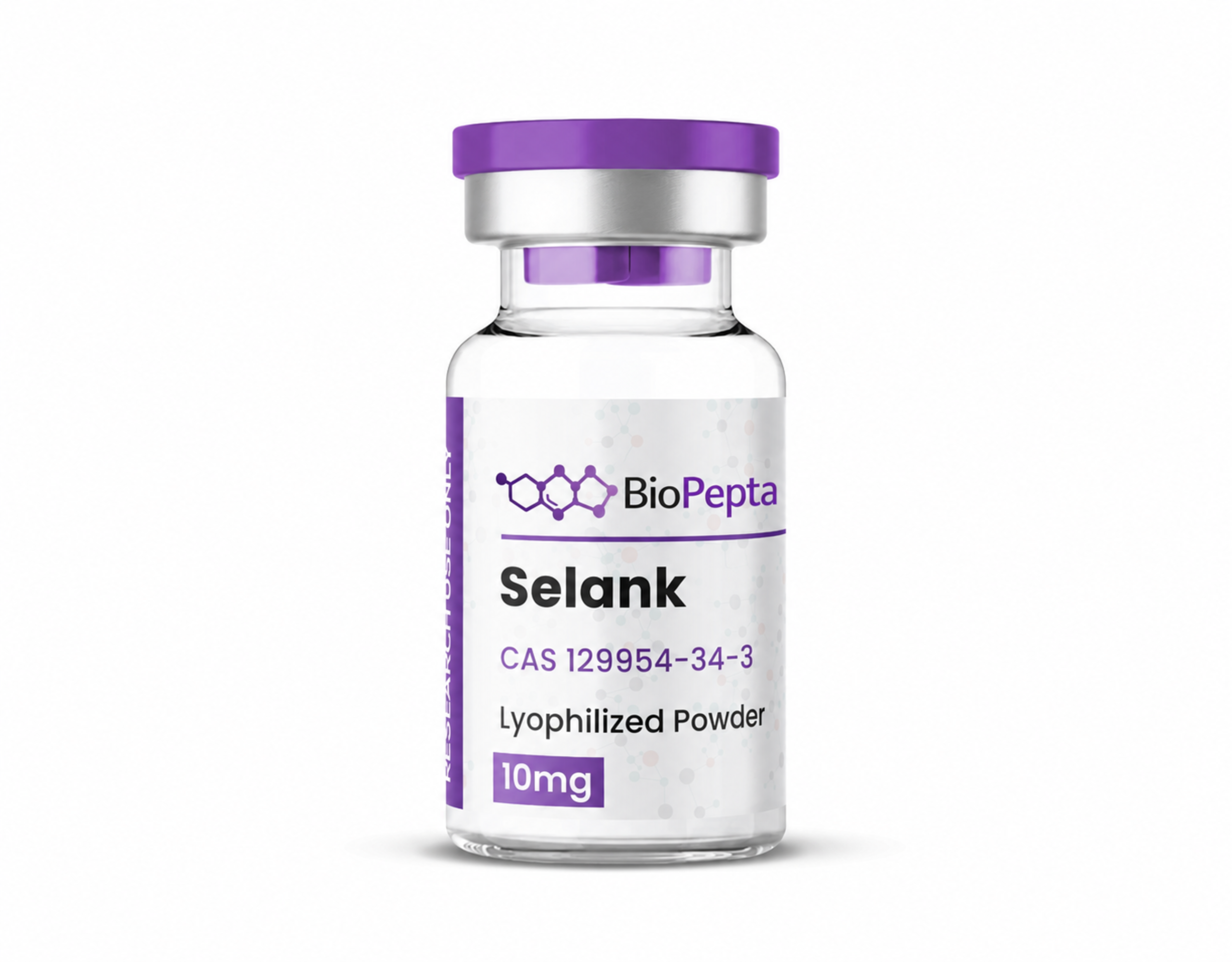
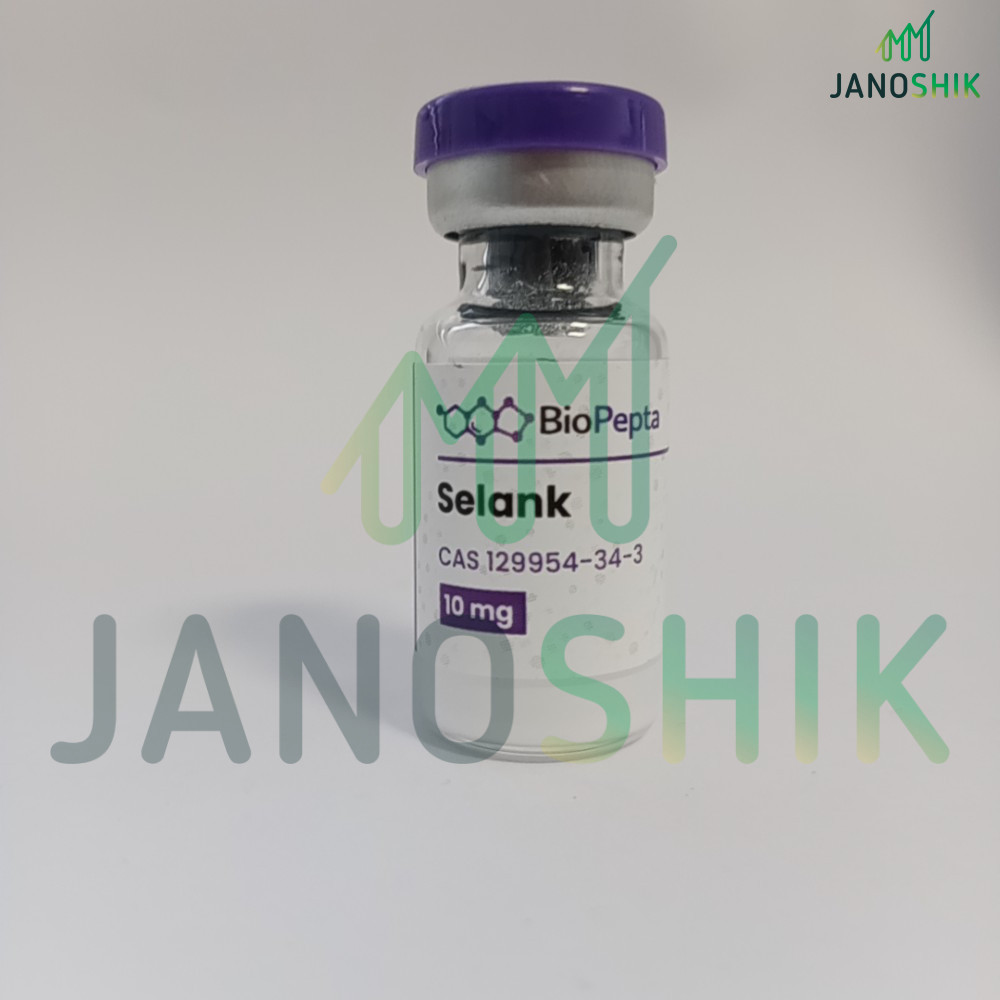
Selank – Characteristics, Structure, and Use in Laboratory Research
What is Selank?
Selank is a synthetic peptide developed based on the naturally occurring tetrapeptide Tuftsin. The molecule was designed as a modified analog of a short peptide, and its properties are the subject of research in neurobiology, biochemistry, molecular biology, and experimental pharmacology.
In scientific literature, Selank is primarily described as a model compound used to study the biological activity of short peptides and mechanisms related to nervous system function. Due to its short peptide chain length, it also represents an interesting research subject concerning the relationship between chemical structure and biological properties.
Chemical Structure
Selank belongs to the group of synthetic oligopeptides. Its structure is derived from the natural tetrapeptide Tuftsin, whose amino acid sequence includes Thr-Lys-Pro-Arg.
In the case of Selank, an additional Pro-Gly-Pro fragment was introduced into this sequence, resulting in a synthetic heptapeptide with the sequence Thr-Lys-Pro-Arg-Pro-Gly-Pro.
Modifying the structure of a natural peptide is an example of designing peptide analogs, where the impact of individual molecular elements on physicochemical and biological properties can be analyzed through controlled sequence changes.
Due to its relatively small size, Selank can also be used as a model in studies on the stability of short peptides, their chemical properties, and interactions with biological systems.
Selank as a Subject of Scientific Research
Selank is the subject of scientific research primarily related to neurobiology, peptide chemistry, and experimental pharmacology. Studies on this compound include analyzing its molecular properties and potential mechanisms of interaction with processes occurring in the nervous system.
The most common research directions include:
- characterization of biologically active synthetic peptides,
- studies on the mechanisms of action of short peptides,
- analysis of structure-function relationships of peptides,
- studies on chemical and enzymatic stability,
- analysis of processes related to nervous system function,
- studies on the expression of selected genes and proteins,
- analysis of signaling pathways,
- molecular modeling,
- neurobiology and molecular biology.
Selank also appears in experimental work concerning the influence of short peptides on processes occurring in nerve cells and the mechanisms regulating the body’s response to various stimuli.
Use in Laboratory Research
Due to its defined and relatively simple chemical structure, Selank can be the subject of research conducted by laboratories specializing in peptide chemistry, biochemistry, neurobiology, and experimental pharmacology.
In laboratory research, it can be analyzed using, among others:
- biochemistry,
- neurobiology,
- molecular biology,
- peptide chemistry,
- experimental pharmacology,
- studies on peptide mechanisms of action,
- analysis of gene and protein expression,
- studies of signaling pathways,
- high-performance liquid chromatography (HPLC),
- mass spectrometry (LC-MS),
- methods for peptide identification and characterization.
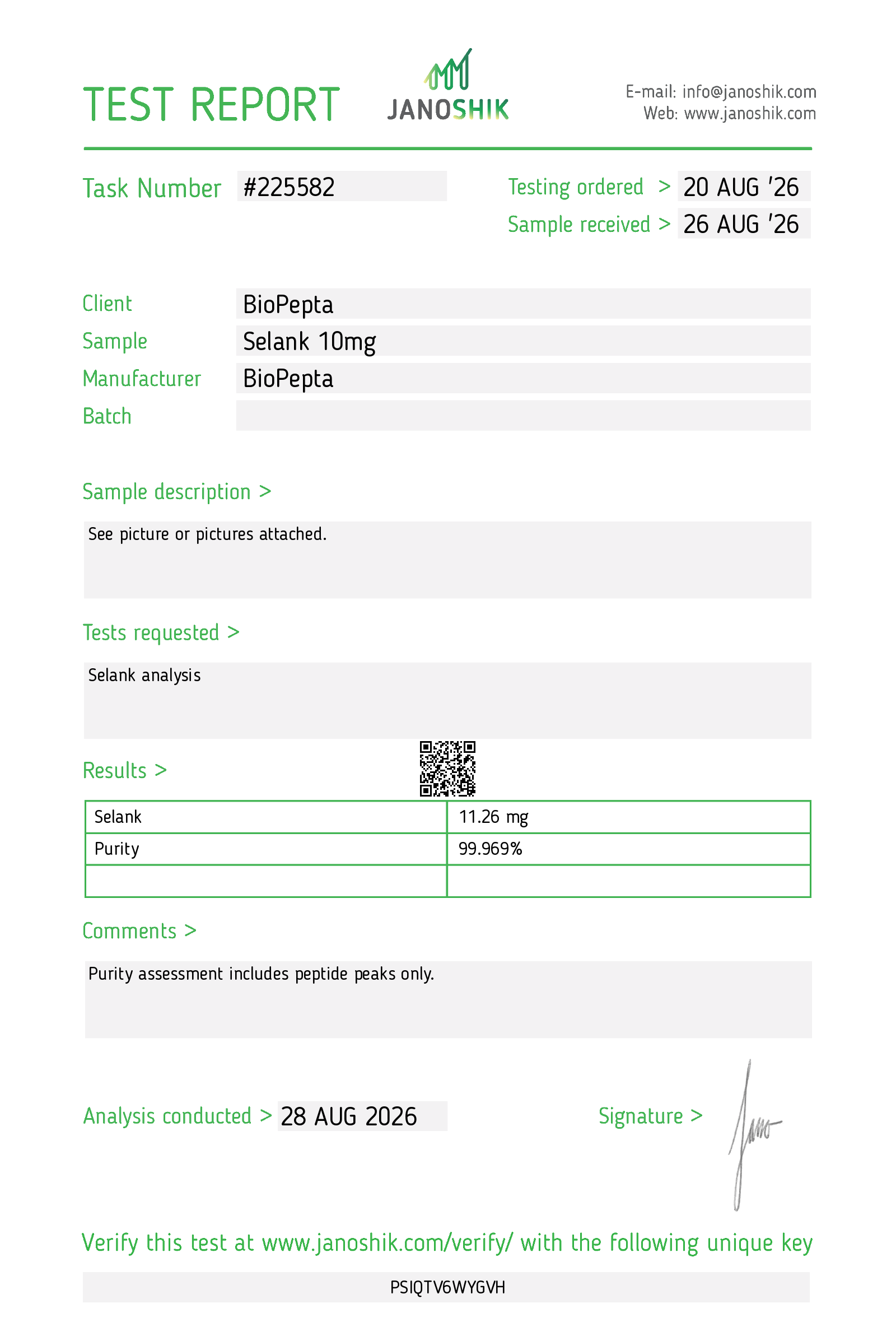
Chromatographic methods and mass spectrometry can be used to confirm the compound’s identity, assess its purity, and analyze the chemical profile of the sample.
Significance in Peptide Research
Synthetic analogs of short peptides, such as Selank, are interesting models for studying the relationship between molecular structure and its physicochemical and biological properties.
Selank is particularly interesting from the perspective of designing analogs of naturally occurring peptides. Comparing its properties with the initial Tuftsin structure allows for analyzing the significance of additional amino acid residues and the impact of sequence modifications on the behavior of the entire molecule.
This type of research finds application in peptide chemistry, neurobiology, molecular biology, and experimental pharmacology. Selank is an example of a synthetic oligopeptide that can be used as a model for studying the structure, stability, analytical properties, and potential mechanisms of action of short peptide molecules.

 Free shipping on orders over 500 PLN
 Order by 3 PM for same-day shipping


Reviews
There are no reviews yet