Description
AOD-9604 – Characteristics, Structure, and Application in Laboratory Research
What is AOD-9604?
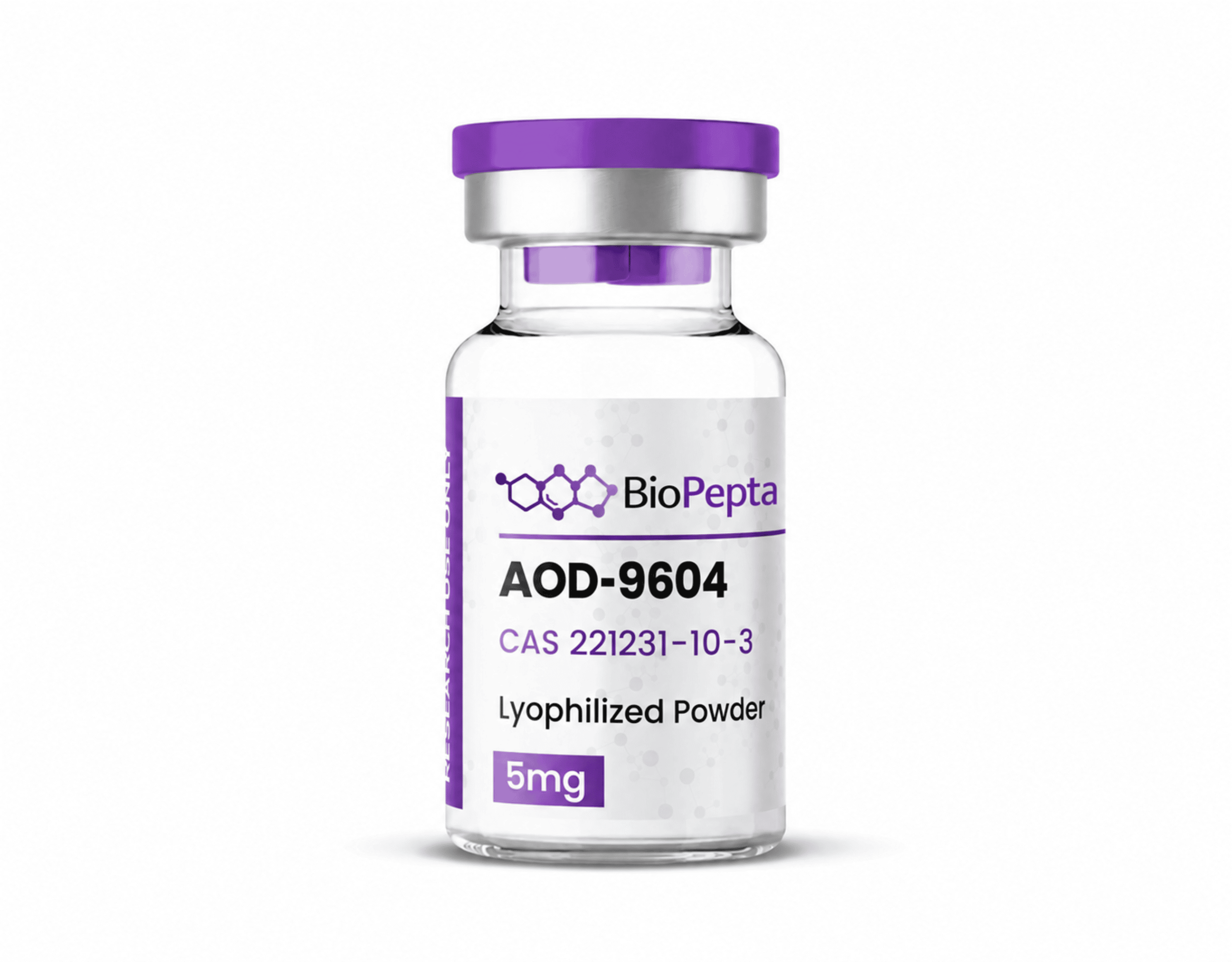
AOD-9604 is a synthetic peptide that is a fragment of the human growth hormone (HGH). The compound was designed based on the region covering the terminal fragment of the growth hormone molecule and has been the subject of research related to fat tissue metabolism mechanisms and the biological activity of HGH-derived peptides from the beginning.
AOD-9604 attracts scientific interest primarily due to its potential use as a model compound in studies on lipid metabolism, adipocyte biology, and the relationship between peptide structure and biological activity.
In scientific literature, AOD-9604 is mainly described in the context of preclinical and experimental studies regarding processes related to fatty acid metabolism and adipose tissue function.
Chemical Structure
AOD-9604 is a synthetic peptide that is a modified fragment of human growth hormone. Its construction is based on the sequence corresponding to the HGH 176–191 fragment, which was analyzed for biological properties independent of the full growth hormone molecule.
Modifications were applied to the structure of AOD-9604 to increase peptide stability and preserve the desired properties characteristic of the studied HGH fragment.
Due to its relatively small molecular size, AOD-9604 serves as an interesting model in research on short bioactive peptides. Analysis of its properties also allows for the study of the relationship between amino acid sequence, spatial structure, and the biological activity of hormone-derived peptides.
AOD-9604 as a Subject of Scientific Research
AOD-9604 has been the subject of experimental studies primarily related to adipose tissue metabolism and processes occurring in adipocytes. Its potential impact on processes related to lipolysis and fatty acid metabolism is of particular interest.
The most common research directions include:
- lipid metabolism,
- lipolysis,
- adipocytes and adipose tissue biology,
- growth hormone fragments,
- HGH peptide analogs,
- relationship between peptide structure and activity,
- molecular biology,
- peptide biochemistry,
- molecular modeling,
- stability and characterization of synthetic peptides.
AOD-9604 can also be used as a research model during comparative analyses regarding the biological activity of growth hormone fragments and the design of new peptide analogs.
Application in Laboratory Research
AOD-9604 is used primarily in laboratory and preclinical research concerning peptide biology, lipid metabolism, and mechanisms related to adipose tissue function.
It is most frequently analyzed in works within the fields of:
- biochemistry,
- molecular biology,
- peptide chemistry,
- adipocyte biology,
- lipid metabolism,
- research on growth hormone fragments,
- characterization of synthetic peptides,
- peptide stability analysis,
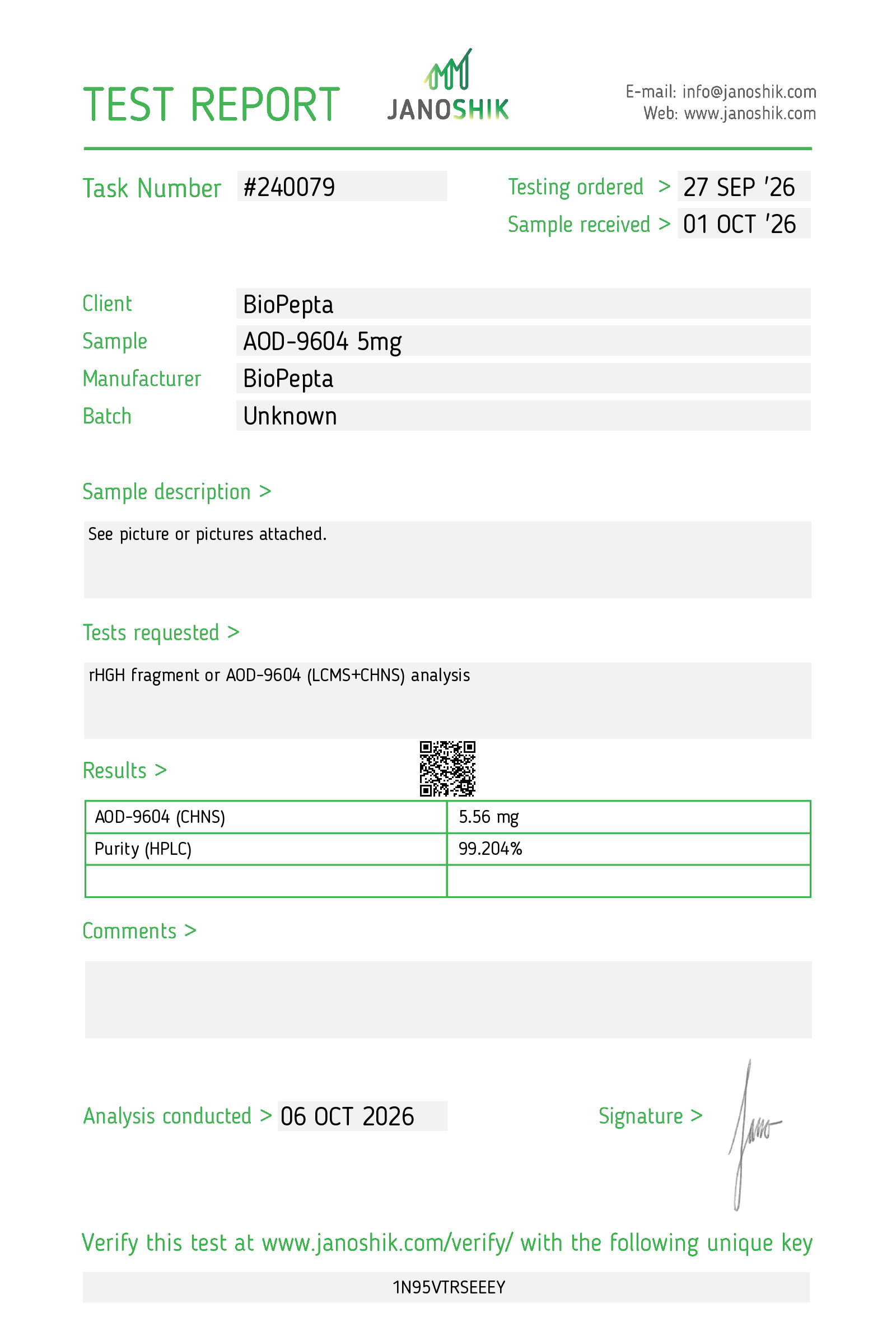
- liquid chromatography (HPLC),
- mass spectrometry (LC-MS),
- peptide identification and quality control methods.
In laboratory research, AOD-9604 can serve as a model compound enabling the analysis of the relationship between a specific amino acid sequence and observed biological properties.
Significance in Peptide Research
AOD-9604 is an example of a synthetic peptide developed based on a fragment of human growth hormone. Its research significance stems primarily from the possibility of conducting studies on the activity of short protein fragments and their potential involvement in processes related to lipid metabolism.
Research on AOD-9604 covers issues related to peptide chemistry, adipose tissue metabolism, adipocyte biology, and the design and characterization of hormone fragment analogs.
Thanks to its specific chemical structure and well-defined amino acid sequence, AOD-9604 can be a useful model in experimental studies on the relationship between peptide structure, stability, and biological activity.

 Free shipping on orders over 500 PLN
 Order by 3 PM for same-day shipping


Reviews
There are no reviews yet