Description
Retatrutide – Characteristics, Structure, and Laboratory Research Applications
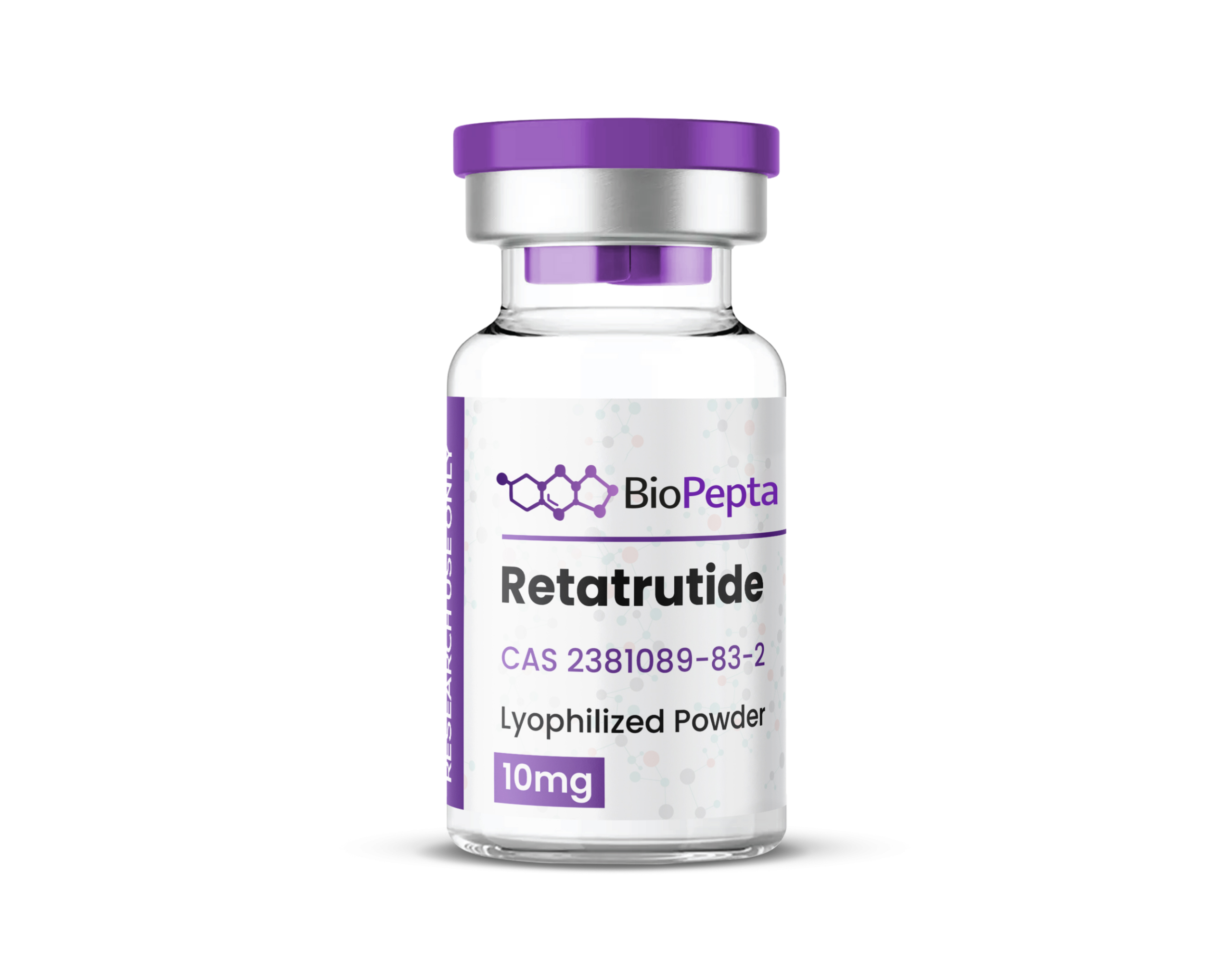
What is Retatrutide?
Retatrutide is a synthetic peptide belonging to the group of multifunctional peptide receptor agonists. This compound was developed as a research tool to analyze the simultaneous activation of several cellular signaling pathways, which distinguishes it from many previously developed peptides that act on a single receptor.
Due to its complex structure and multi-receptor nature, Retatrutide has become the subject of intensive research in molecular biology, biochemistry, peptide chemistry, and experimental pharmacology. In scientific literature, it is often used as a model to study the relationship between peptide structure and its ability to interact with various peptide receptors.
Chemical Structure
Retatrutide is a synthetic peptide designed using modern peptide engineering methods. Its structure contains appropriately selected amino acid modifications and elements that increase the molecule’s stability under laboratory conditions.
One of Retatrutide’s most characteristic features is its ability to interact with three different peptide receptors, which sets it apart from classic analogs targeting a single receptor. This property has made the compound an interesting subject for research on designing multifunctional peptides.
Retatrutide as a Subject of Scientific Research
Retatrutide belongs to a group of peptides that generate significant interest in research on cellular signaling and ligand-receptor interactions. Scientific publications primarily focus on analyzing its structure, physicochemical properties, and mechanisms of binding to peptide receptors.
The most frequently described research directions include:
- design of multi-receptor peptide analogs,
- analysis of GLP-1 receptors,
- analysis of GIP receptors,
- analysis of glucagon receptors,
- structure-function relationship of peptides,
- molecular modeling,
- structural biology,
- peptide chemistry,
- physicochemical properties of synthetic peptides.
Research on retatrutide also forms part of broader work on the development of new-generation peptides and their design methods.
Application in Laboratory Research
In the scientific community, Retatrutide is used in basic and experimental research concerning peptides and membrane receptors.
It most often appears in works covering:
- biochemistry,
- molecular biology,
- structural biology,
- peptide chemistry,
- experimental pharmacology,
- peptide receptor research,
- modeling ligand-receptor interactions,
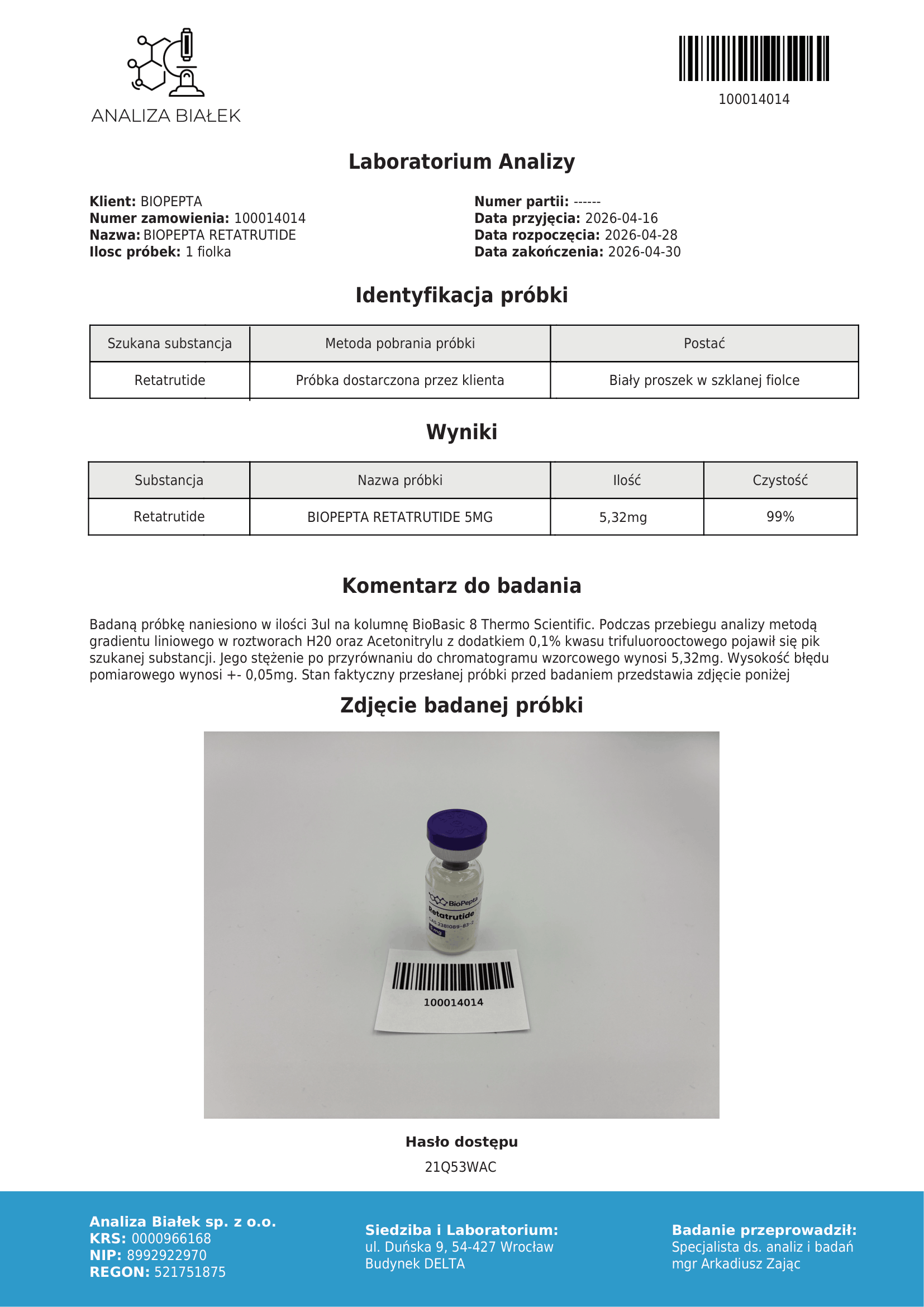
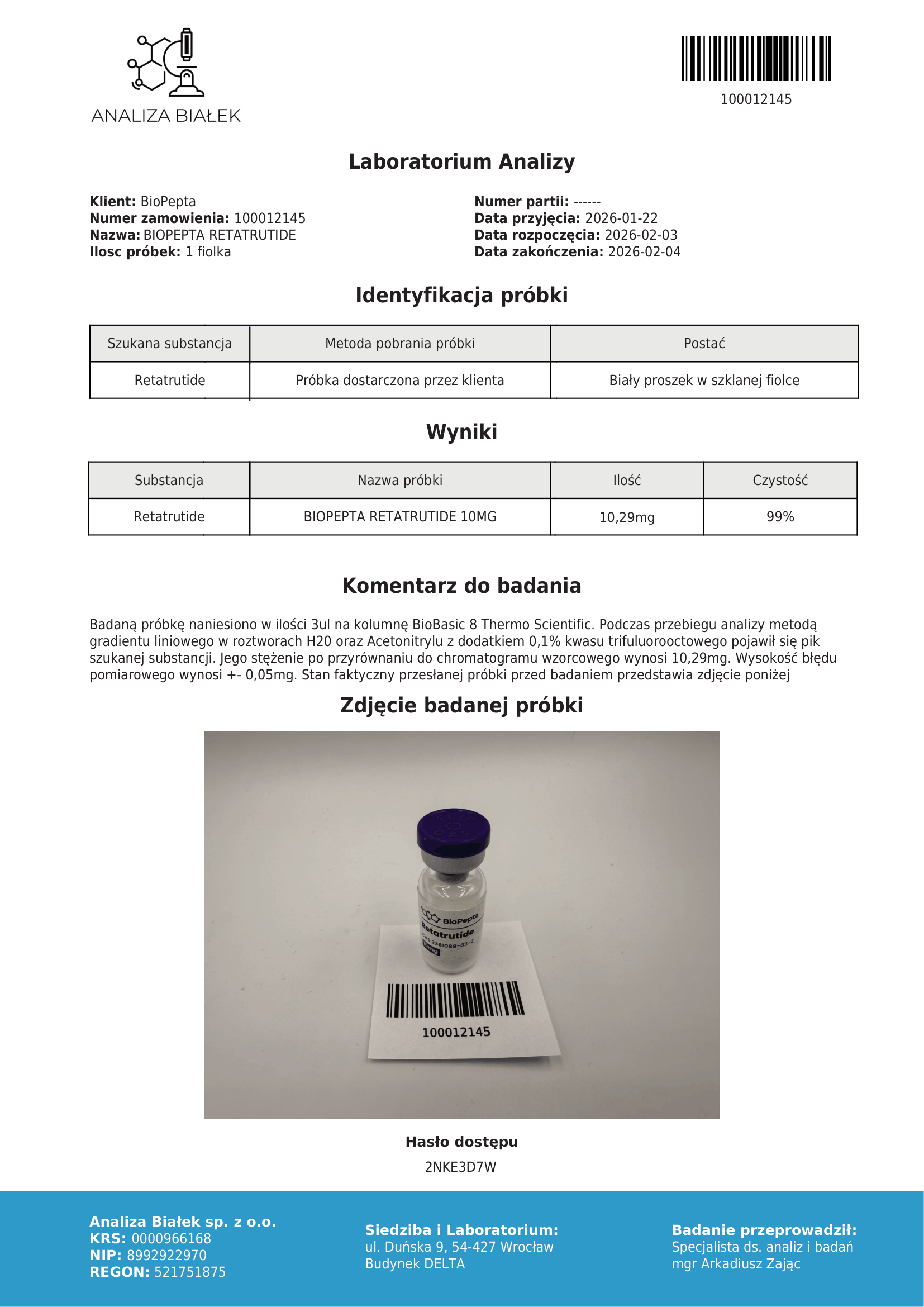
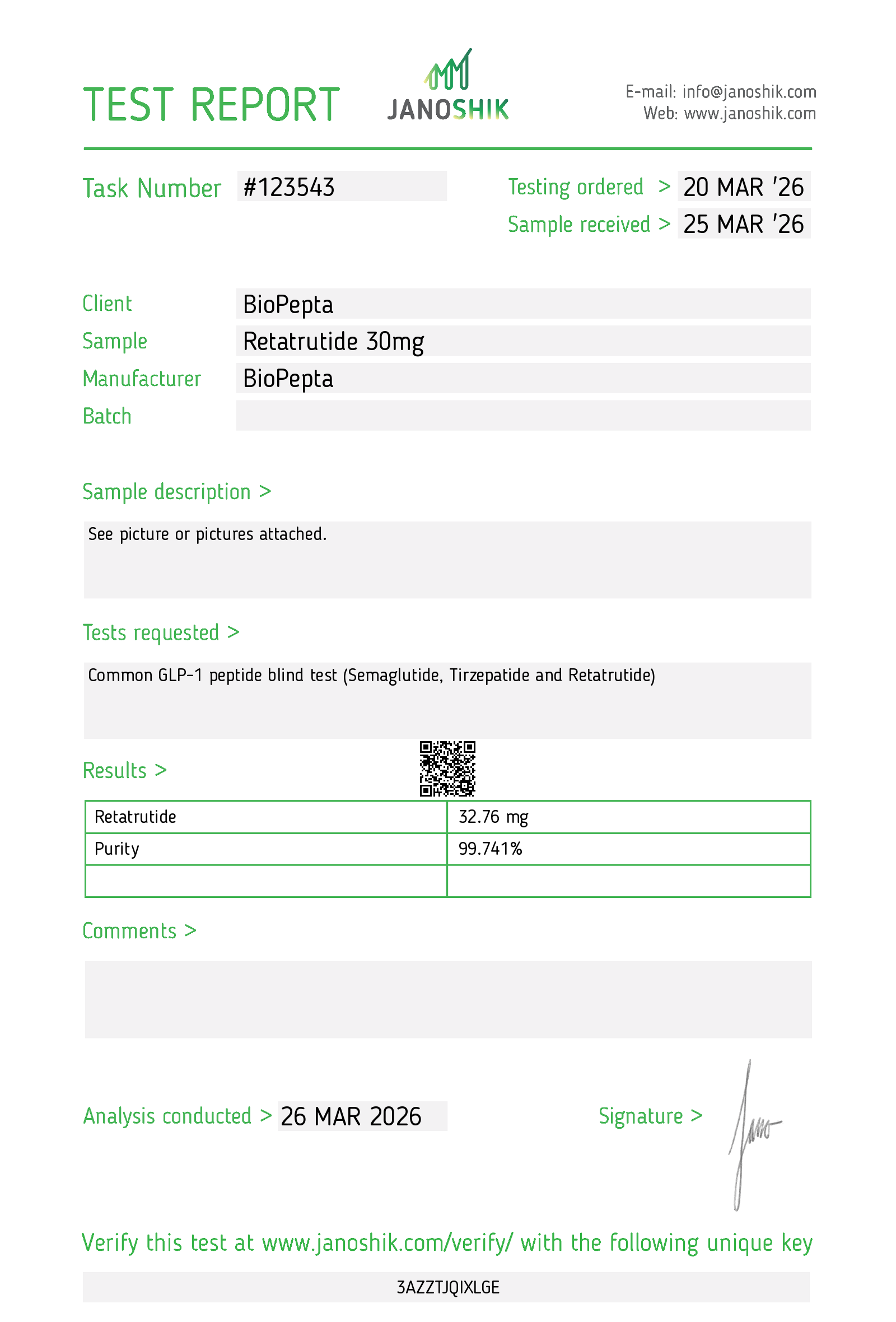
- liquid chromatography (HPLC),
- mass spectrometry (LC-MS),
- methods for peptide identification and characterization.
Retatrutide is also used in research on the design and optimization of synthetic peptide analogs with complex receptor activity.
Significance in Peptide Research
The development of synthetic peptides capable of interacting with more than one receptor is one of the directions of contemporary research in peptide chemistry. Retatrutide is an example of a molecule developed using this approach, which is why it often appears in publications analyzing the design of multifunctional peptide ligands.
Research on such compounds allows for a better understanding of the relationships between a peptide’s chemical structure, its spatial structure, and its mode of interaction with receptors at the molecular level.

 Free shipping on orders over 500 PLN
 Order by 3 PM for same-day shipping


Reviews
There are no reviews yet