Description
GHK-Cu – characteristics, structure, and application in laboratory research
What is GHK-Cu?
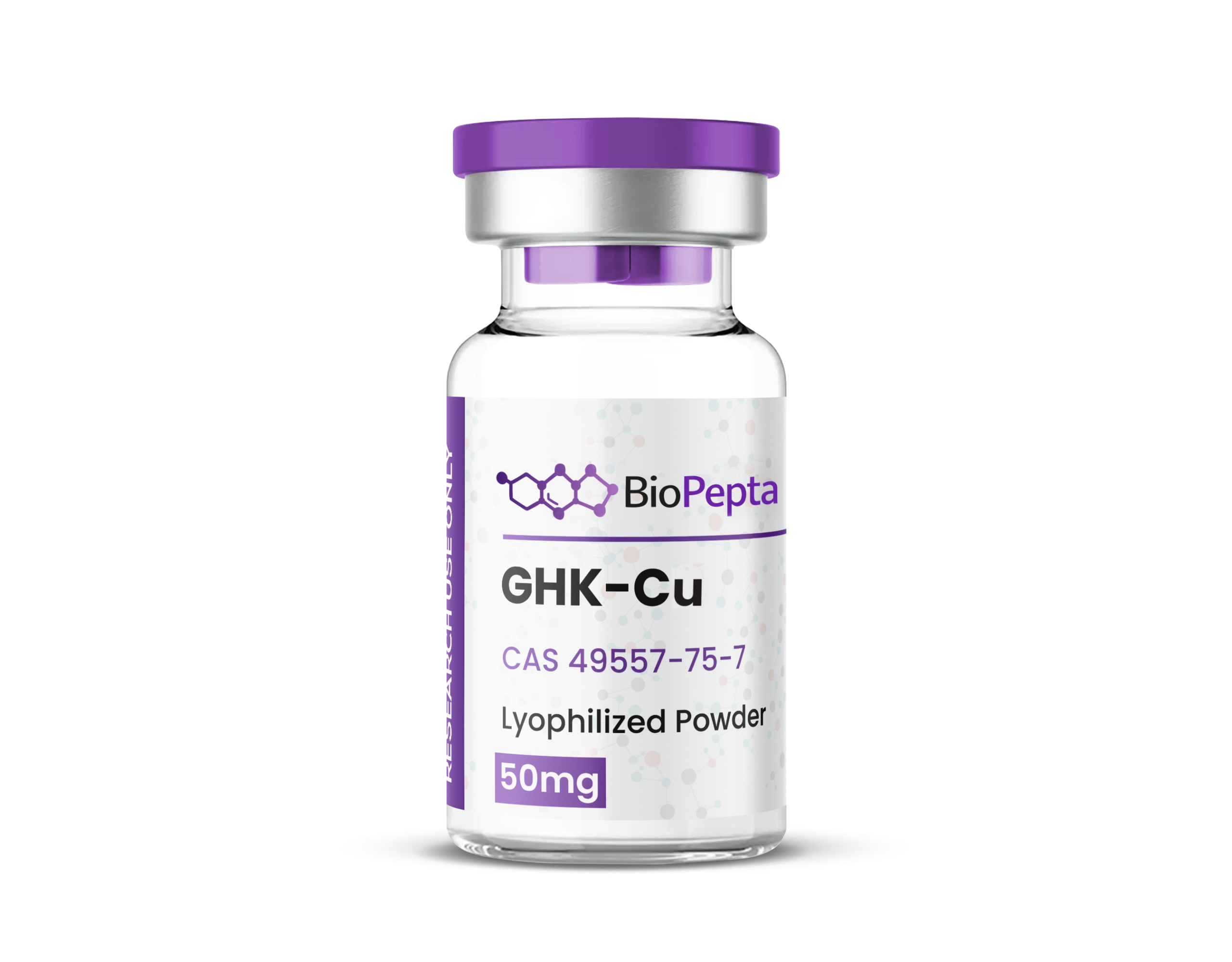
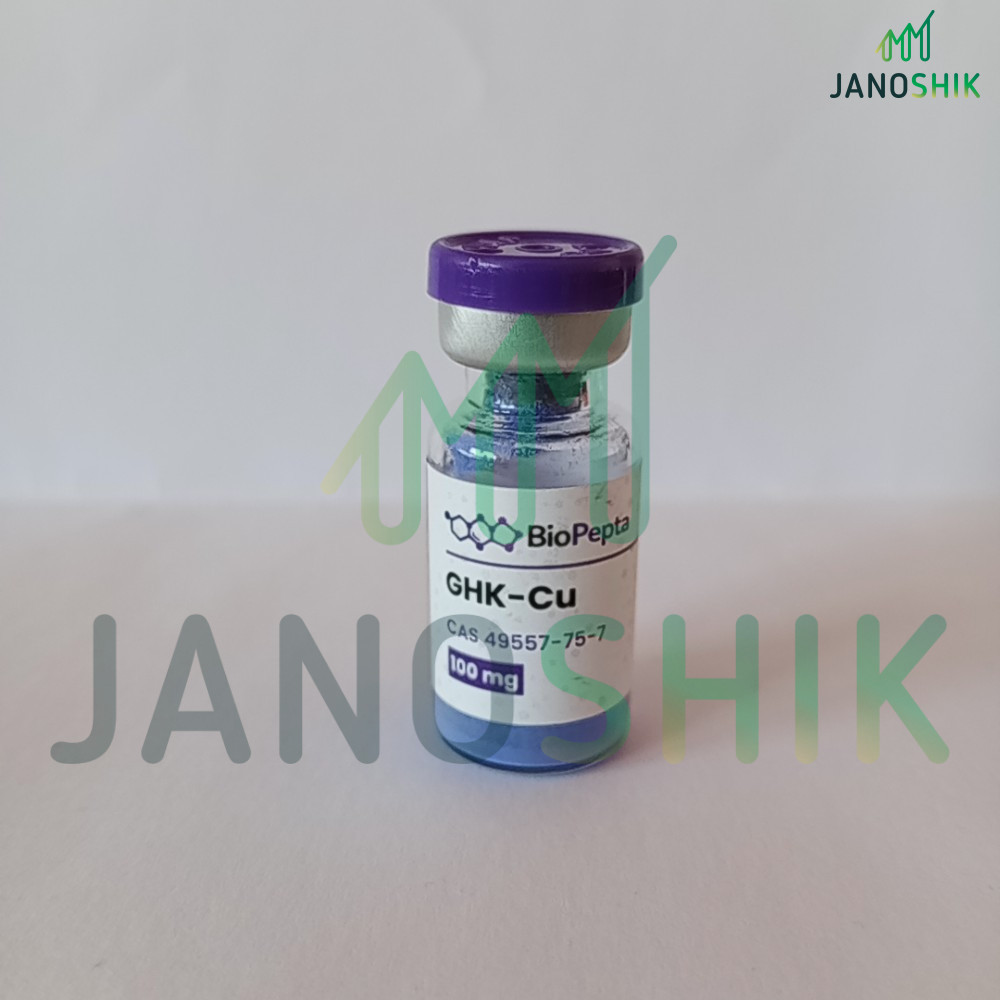
GHK-Cu (Glycyl-L-Histidyl-L-Lysine Copper Complex), also known as Copper Tripeptide-1, is a naturally occurring complex of the tripeptide GHK (glycine–histidine–lysine) with a copper(II) ion (Cu²⁺). The molecule was first described in 1973 by Loren Pickart during research on peptides present in human plasma. Since then, GHK-Cu has become one of the best-studied copper-binding peptides and is widely used in research in molecular biology, biochemistry, and peptide chemistry.
Unlike many research peptides, GHK occurs naturally in the human body. It has been detected in blood plasma, saliva, and urine, where it forms stable complexes with copper ions. This phenomenon has made the peptide an important research model in the analysis of the biological role of metal ions and their interactions with short peptides.
Chemical structure
GHK-Cu is a tripeptide composed of three amino acids:
- glycine (Gly),
- histidine (His),
- lysine (Lys).
The peptide forms a stable coordination complex with a single copper(II) ion, and the presence of this ion gives the compound its characteristic blue color. The chemical properties of GHK-Cu result from the high affinity of the GHK sequence for copper ions and the stability of the resulting complex. For this reason, GHK-Cu is often used as a model for research on metal chelation and interactions between peptides and metal ions.
GHK-Cu as a subject of scientific research
GHK-Cu is among the best-characterized peptide–metal complexes described in scientific literature. Publications dedicated to this molecule focus primarily on the analysis of its chemical properties, peptide biology, and cell signaling mechanisms.
The most frequently described research directions include:
- copper-binding peptides,
- peptide–metal complexes,
- metal ion chelation,
- extracellular matrix biology,
- gene expression,
- molecular biology,
- cell biology,
- peptide chemistry,
- molecular modeling,
- properties of coordination complexes.
In scientific literature, GHK-Cu is also used to analyze the relationships between the structure of metallopeptide complexes and their physicochemical and biological properties.
Application in laboratory research
GHK-Cu is used in basic and experimental research conducted in laboratories dealing with peptides, biochemistry, and cell biology.
It is most commonly used in work regarding:
- peptide chemistry,
- biochemistry,
- molecular biology,
- cell biology,
- metal complex research,
- gene expression studies,
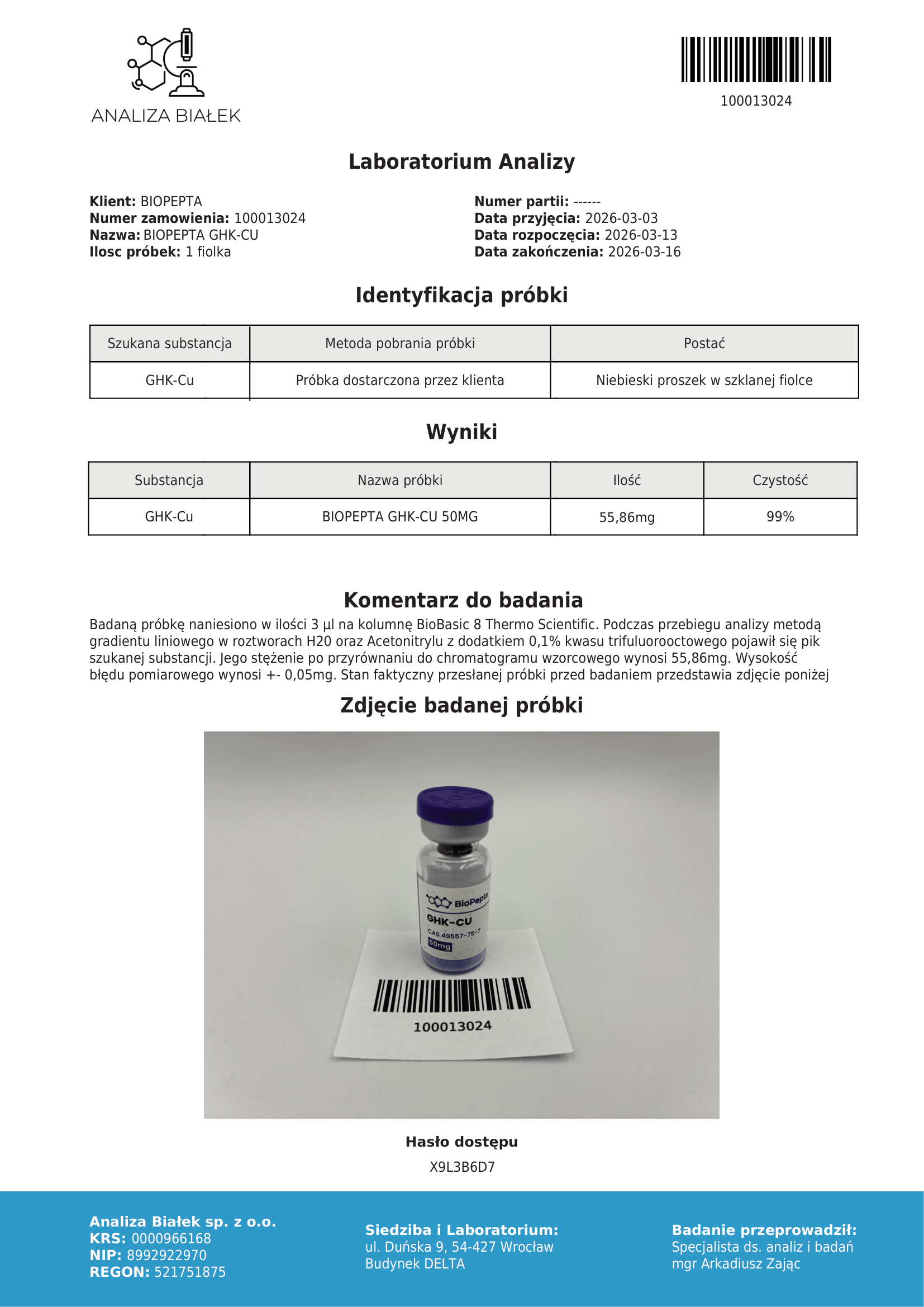
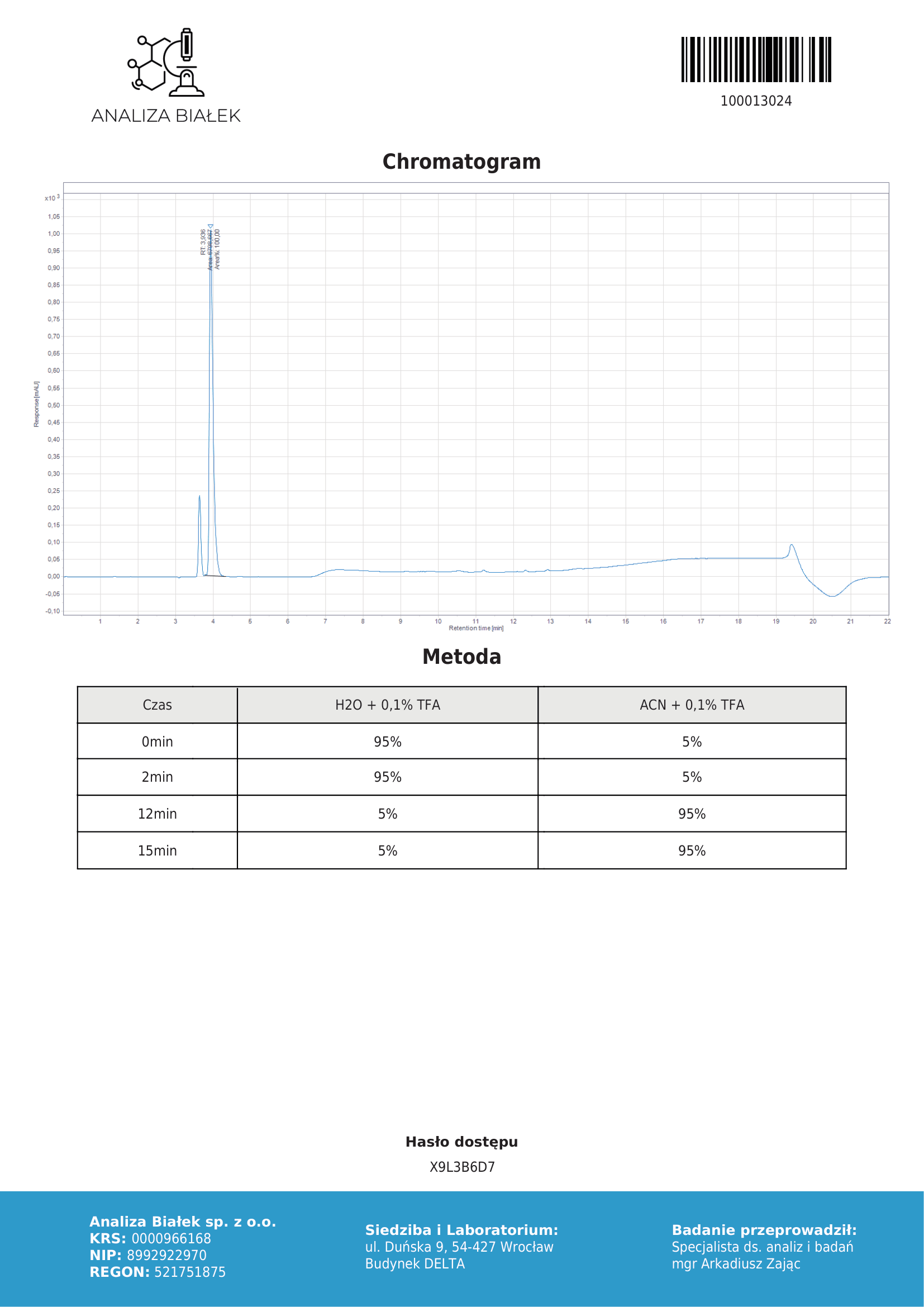
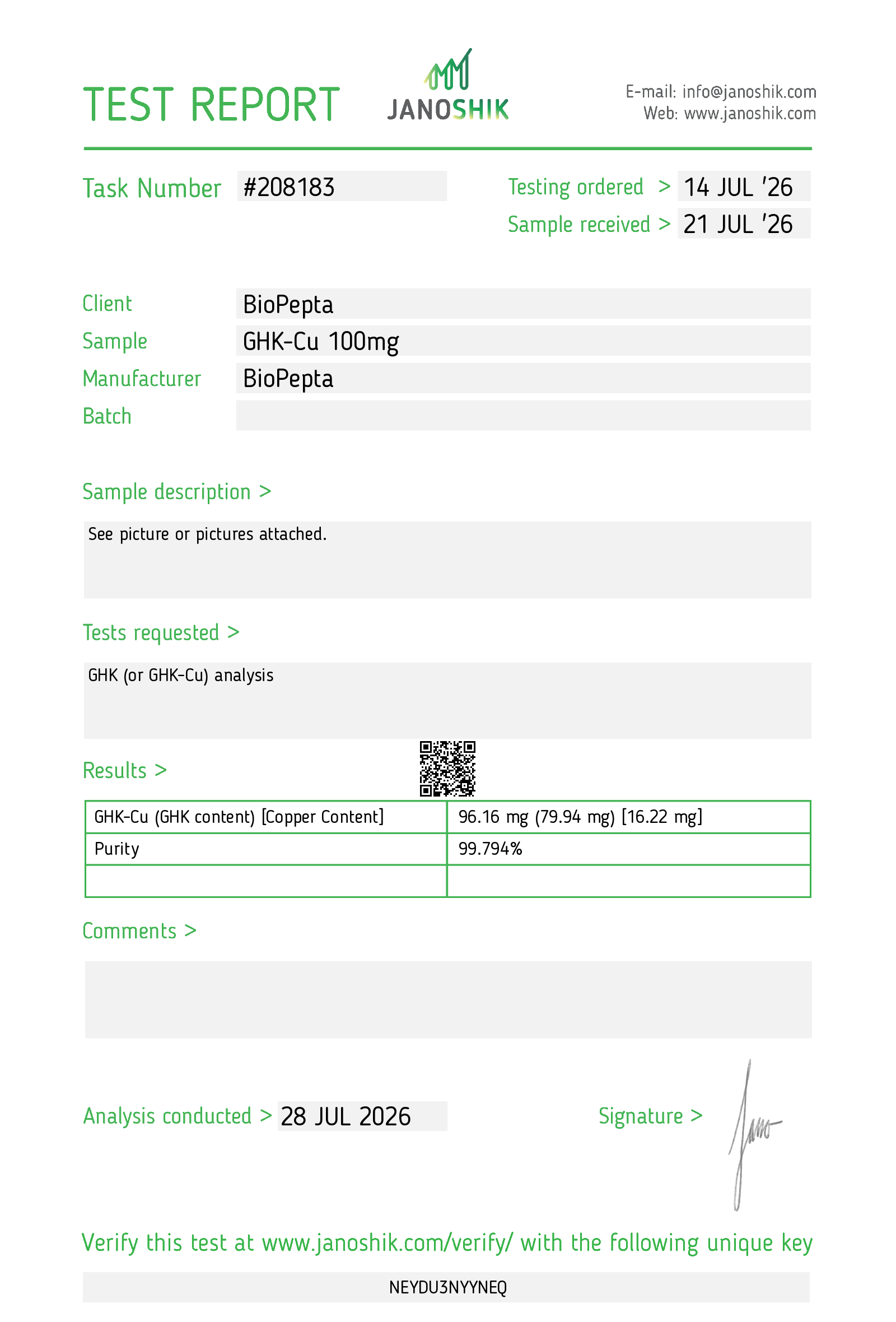
- liquid chromatography (HPLC),
- mass spectrometry (LC-MS),
- peptide identification and characterization,
- stability analysis of peptide–metal complexes.
Due to its well-known structure and coordination properties, GHK-Cu is often used as a reference compound during research on metal-ion-binding peptides and the design of new peptide complexes.
Significance in peptide research
GHK-Cu holds a special place in research on biologically active peptides because it serves as an example of a naturally occurring peptide–metal ion complex. Its discovery contributed to the development of research regarding the role of short peptides in cellular regulation processes and the mechanisms of copper transport and binding.
Thanks to its simple structure and well-known chemical properties, GHK-Cu remains one of the most frequently used research models in peptide chemistry, molecular biology, and metallopeptide complex research.

 Free shipping on orders over 500 PLN
 Order by 3 PM for same-day shipping


Reviews
There are no reviews yet